Options Mall · Business shirts near Andheri · Vile Parle West, Mumbai

The 9-to-9 09:00 The business day, dressed +91 8369381345

All stops 01—12

+91 8369381345 optionsclothingmumbai@gmail.com

04 / 12 · Shirt Styles

Reference catalogue · 26 entries

Shirt Styles Index

A visual reference to the parts that make a business shirt look the way it does — collars, cuffs, patterns and construction details — each coded, compared and explained by its effect on appearance.

Read a shirt from the top down

Two business shirts in the same colour can look completely different. A spread collar, double cuffs and a French front make a white shirt ready for a board meeting; a button-down collar, barrel cuffs and a chest pocket make the same white relaxed enough for a Friday. This index breaks a shirt into its parts so you can see which part is doing the work.

Use the filter to focus on one class. Codes run C for collars, K for cuffs, P for patterns and D for construction details. Photographs show real shirts as colour and fabric examples; the line diagrams show the shapes precisely, where a flat-lay photo cannot.

Filter the index

Class 1 of 4 · C-01 to C-07

Collars

The collar is the first thing anyone reads on a business shirt. It frames the face, sets how much of a tie knot shows and decides whether the shirt looks better buttoned up with a tie or worn open. The main variable is spread — the distance between the collar points — followed by point length and collar height.

Spread compared Orange dimension line = distance between collar tips. The wider the spread, the wider the face looks and the larger the tie knot it expects.
  1. PointNarrow spread, long points
  2. ClassicModerate spread, medium points
  3. Semi-spreadBetween classic and spread
  4. SpreadWide spread, open frame
  5. CutawayPoints cut back near horizontal
  6. Button-downPoint-style, tips buttoned to the front
  7. BandStanding band, no leaves

C-01Collar

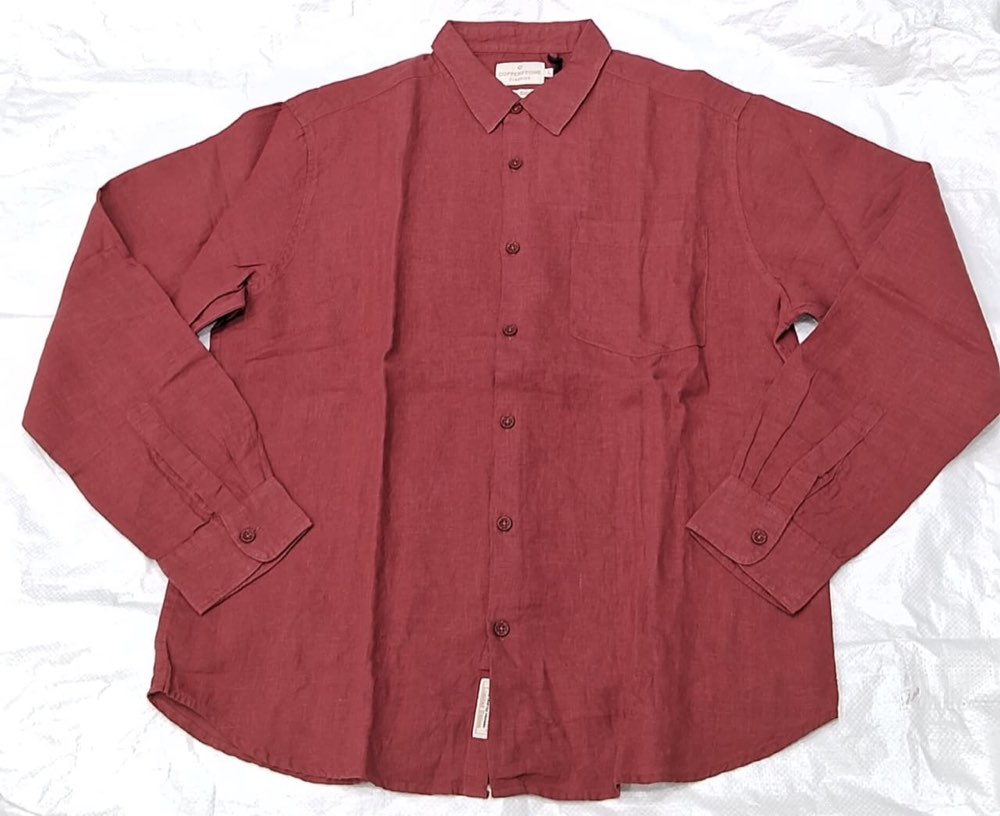
Brick red textured solid shirt with a narrow-set collar, laid flat
Brick red textured solid — narrow-set collar on a plain ground

Point collar

Collar points sit close together and angle steeply down towards the chest, leaving only a small gap for the tie knot. Points are usually a little longer than on a classic collar.

Effect on appearance. Creates a strong downward line that lengthens the neck and face, which flatters rounder or broader faces. Best with a slim four-in-hand knot; a bulky knot pushes the points apart.
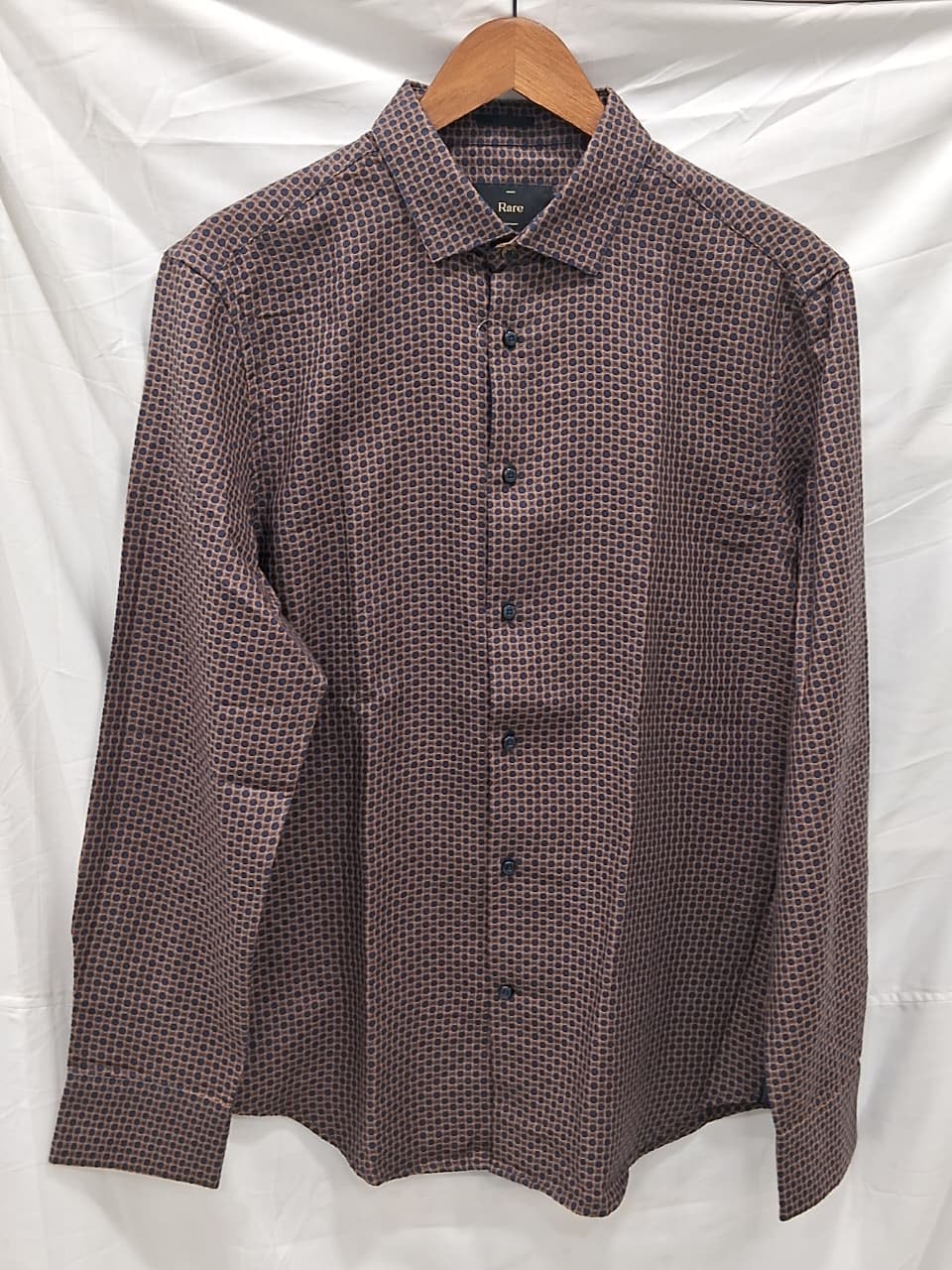
C-02Collar

Mauve micro-geometric print shirt on a wooden hanger, collar points opening out to the sides
Mauve micro-geometric on a hanger — collar points open out to the sides

Spread collar

The points angle outwards, leaving a wide space between them. Collar height is usually generous so the collar stands well under a jacket.

Effect on appearance. Widens the line across the collarbone and balances long or narrow faces. Frames half-Windsor and Windsor knots, and still looks deliberate when worn open.

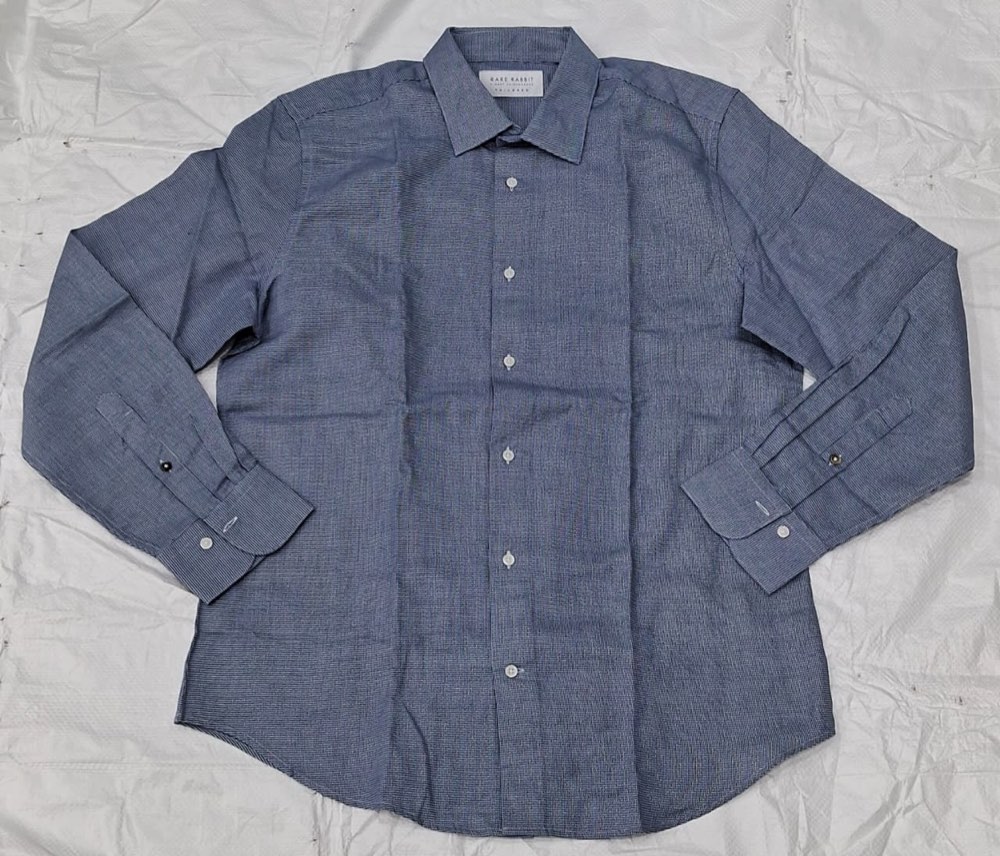
C-03Collar

Blue chambray-look shirt with a moderate collar, laid flat
Blue chambray-look solid — a moderate, middle-ground collar

Semi-spread collar

A compromise between point and spread: the points open to a moderate angle with medium length.

Effect on appearance. The most versatile collar on this index. It suits almost every face shape, takes most knot sizes, and looks equally right with or without a tie.

C-04Collar

Aubergine micro-check shirt with a moderate spread collar, laid flat
Aubergine micro-check — colour and weave example; this collar is a moderate spread, see the diagram for a true cutaway

Cutaway collar

An extreme spread in which the points are cut back so far they run almost horizontally towards the shoulders.

Effect on appearance. Bold and continental. It broadens the face and demands a substantial knot to fill the gap; open-necked, it reads modern and fashion-forward.

C-05Collar

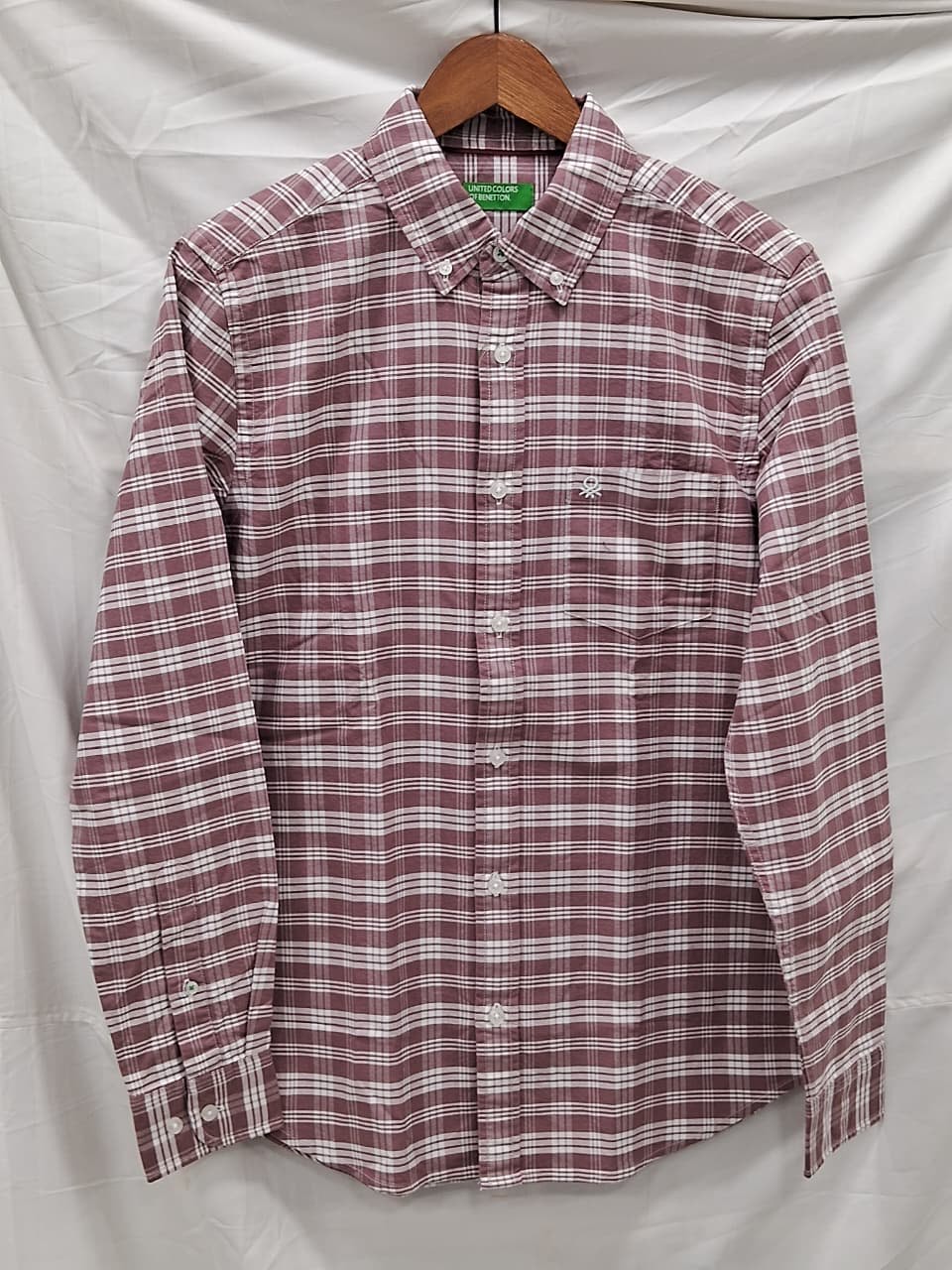
Pink and white check shirt on a wooden hanger with collar points buttoned down to the shirt front
Pink and white check on a hanger — collar points buttoned to the front

Button-down collar

A point-style collar whose tips fasten to the shirt front with small buttons. Originally a sporting detail designed to stop collars flapping.

Effect on appearance. The buttons create a soft roll in the collar, which looks relaxed and tidy without a tie. Traditionally read as less formal than a plain point collar.

C-06Collar

Coral red solid shirt with a medium-length collar, laid flat
Coral red solid — a classic, medium-length collar

Classic collar

The standard business collar: moderate spread, medium point length, medium height. Proportions neither narrow nor wide.

Effect on appearance. Neutral and dependable. It lets colour and fabric lead, and sits correctly under most jackets.

C-07Collar

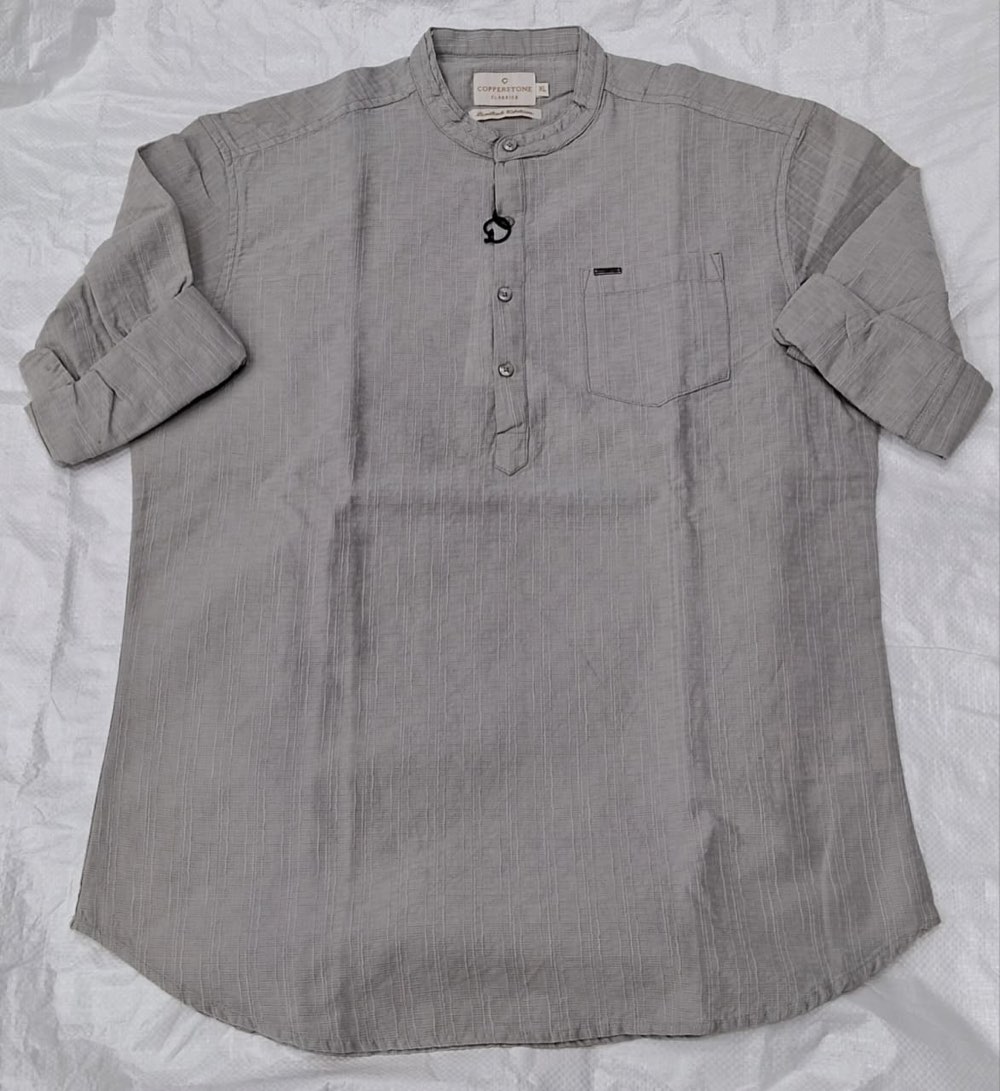
Grey shirt with a standing band collar and chest pocket, laid flat
Grey shirt with a band collar — the standing band without collar leaves

Band & contemporary variations

The band (or mandarin) collar keeps only the standing band. Other contemporary variations include the club collar with rounded points, the hidden button-down with concealed fastenings, the tab collar that links the points behind the tie, and the wing collar reserved for black-tie evenings.

Effect on appearance. A band collar removes the frame entirely, giving a clean, architectural neckline that is never worn with a tie. Club and tab collars add a vintage, deliberate note.

Class 2 of 4 · K-01 to K-05

Cuffs

Cuffs finish the sleeve and are on show every time you reach, write or shake hands. Their fastening sets formality, and their corner shape fine-tunes the look: square reads traditional, angled reads sharp, rounded reads soft.

Cuff shapes compared Each cuff drawn closed, from the outside of the sleeve. The orange link marks a cufflink; the orange slot marks the extra buttonhole of a convertible cuff.
  1. One-button barrelSquare corners
  2. Two-buttonTaller, slightly dressier
  3. AngledMitred corners
  4. RoundedSoftened corners
  5. Double (French)Folded back, cufflink
  6. ConvertibleButton or link

K-01Cuff

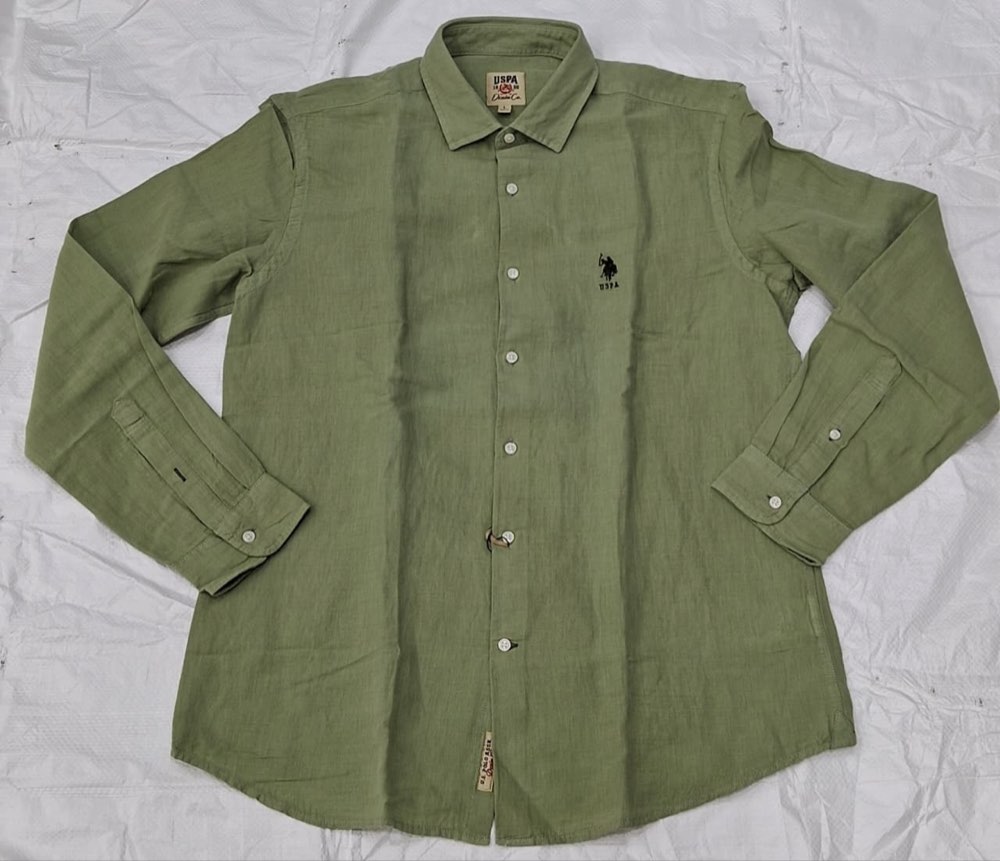
Olive green solid shirt with buttoned barrel cuffs, laid flat
Olive green solid — buttoned barrel cuffs at the sleeve ends

Barrel cuff

A single band of fabric that wraps the wrist and fastens with one or more buttons. The most common cuff on business shirts.

Effect on appearance. Neat, practical and quiet. It keeps the sleeve line clean under a jacket and needs no accessories.

K-02Cuff

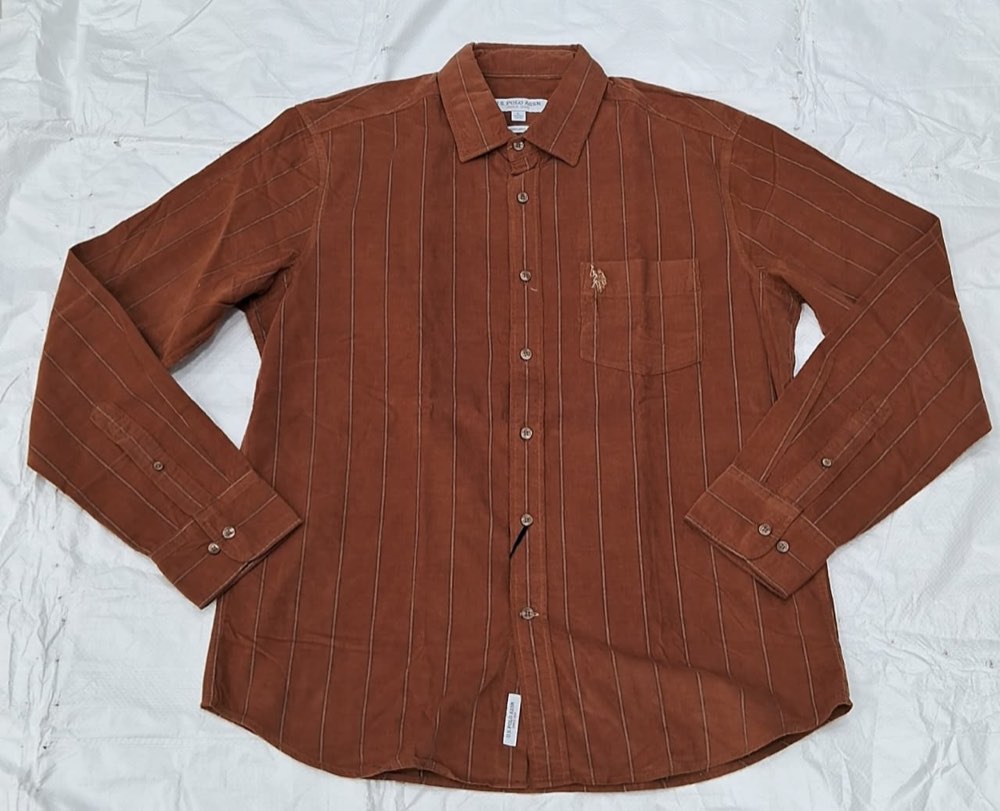
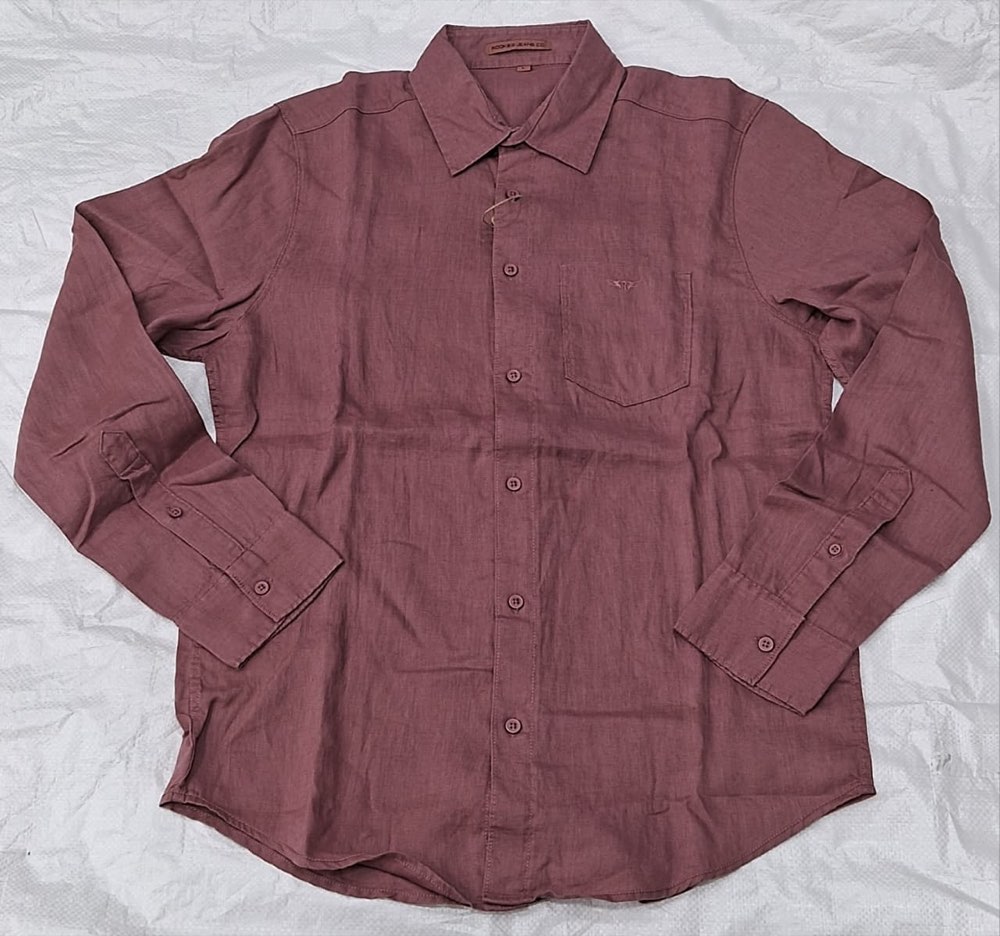
Rust solid shirt with a chest pocket and buttoned cuffs, laid flat
Rust solid with chest pocket — an everyday buttoned cuff

Button cuff variations

Barrel cuffs vary in the number of buttons and the corner cut. One-button cuffs are standard; two-button cuffs are taller and often let you adjust the width. Corners may be square, angled (mitred) or rounded.

Effect on appearance. Two buttons add a touch of formality and suit longer arms. Angled corners look crisp and contemporary; rounded corners look softer and more classic.

K-03Cuff

Diagram — the cuff folds back on itself and closes with a cufflink

Double (French) cuff

A cuff twice the usual length, folded back and fastened with cufflinks through four aligned holes. The two edges are pinched together rather than overlapped.

Effect on appearance. The most formal cuff. It adds visual weight at the wrist, shows a little more cuff below the jacket and introduces a cufflink as a point of detail.

K-04Cuff

Diagram — a button plus an extra buttonhole for an optional cufflink

Convertible cuff

A barrel cuff with a button and buttonholes on both sides, so it can be worn buttoned or closed with a cufflink.

Effect on appearance. Looks like a barrel cuff day to day; with a cufflink it gains a little formality without the bulk of a double cuff.

K-05Cuff

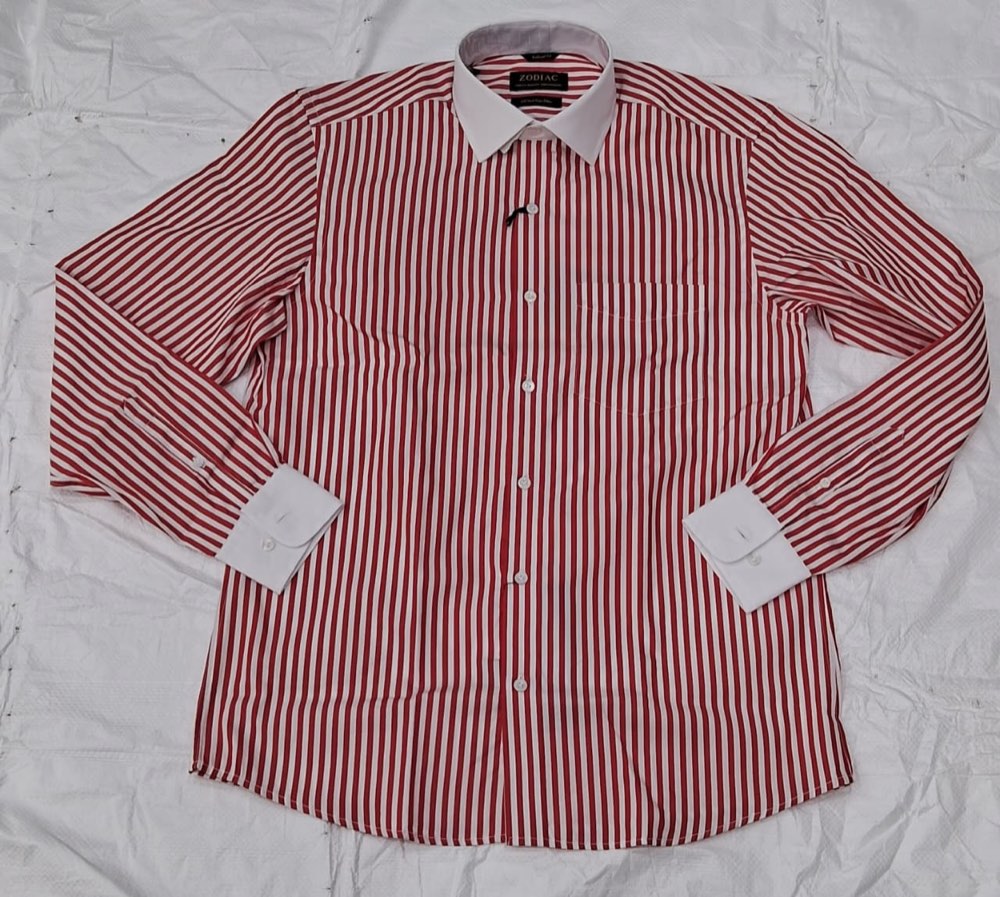
Red and white striped shirt with a white contrast collar and white contrast cuffs, laid flat
Red and white stripe with white contrast collar and cuffs

Contrast cuff

Cuffs, and usually the collar, cut in a different fabric from the body — most often plain white on a striped or coloured shirt.

Effect on appearance. Frames the face and hands with clean white, a traditional city look with real presence. Keep the suit and tie plain so the shirt can lead.

Class 3 of 4 · P-01 to P-07

Patterns

Pattern decides how loudly a shirt speaks. Scale and contrast matter more than the pattern type itself: the smaller and lower-contrast the motif, the more formal the shirt reads, and the more easily it pairs with a patterned tie or jacket.

Pattern scale compared Graphic swatches, from quietest to loudest. Real shirts vary in colour and scale; use these as a guide to structure.
  1. Plain
  2. Pinstripe
  3. Bengal
  4. Gingham
  5. Windowpane
  6. Tattersall
  7. Micro
  8. Texture
  9. Geometric

P-01Pattern

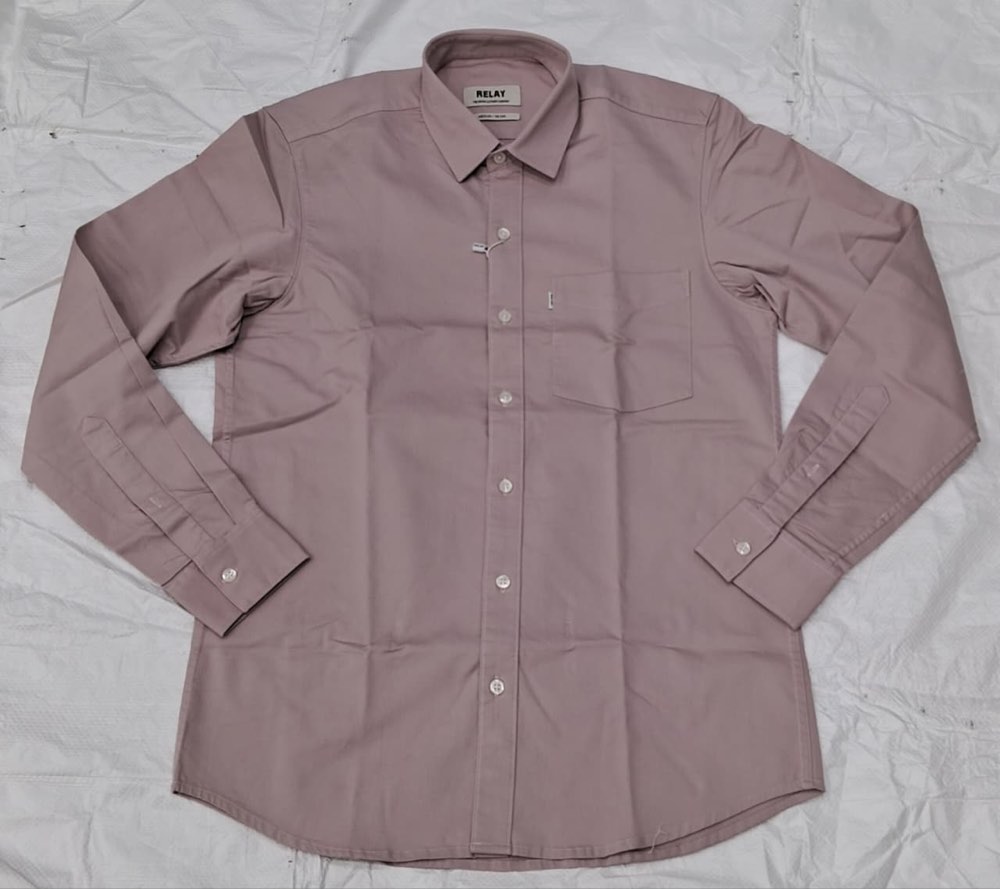
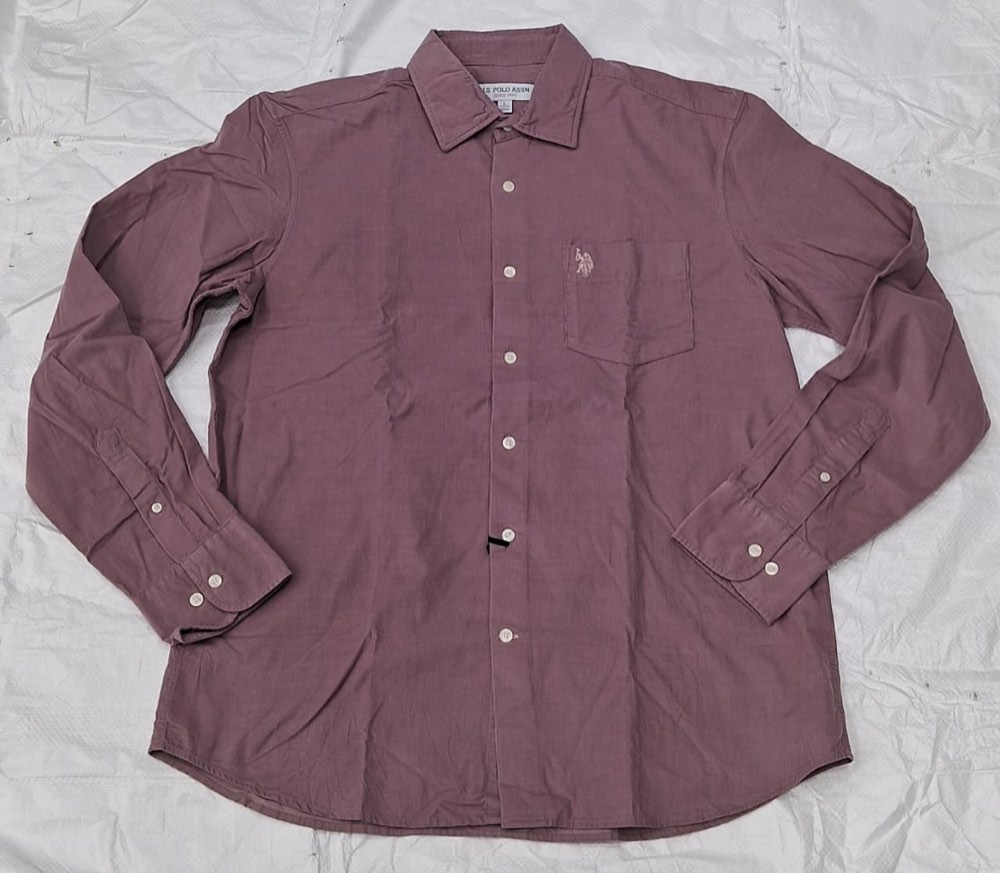
Mauve plain-weave solid shirt, laid flat
Mauve plain-weave solid

Plain

A single colour with no printed or woven motif. Interest comes from the weave — poplin, twill, Oxford — and from the colour itself.

Effect on appearance. Calm and versatile. Plain shirts pair with any tie or jacket pattern, and the lighter the colour, the more formal the result.

P-02Pattern

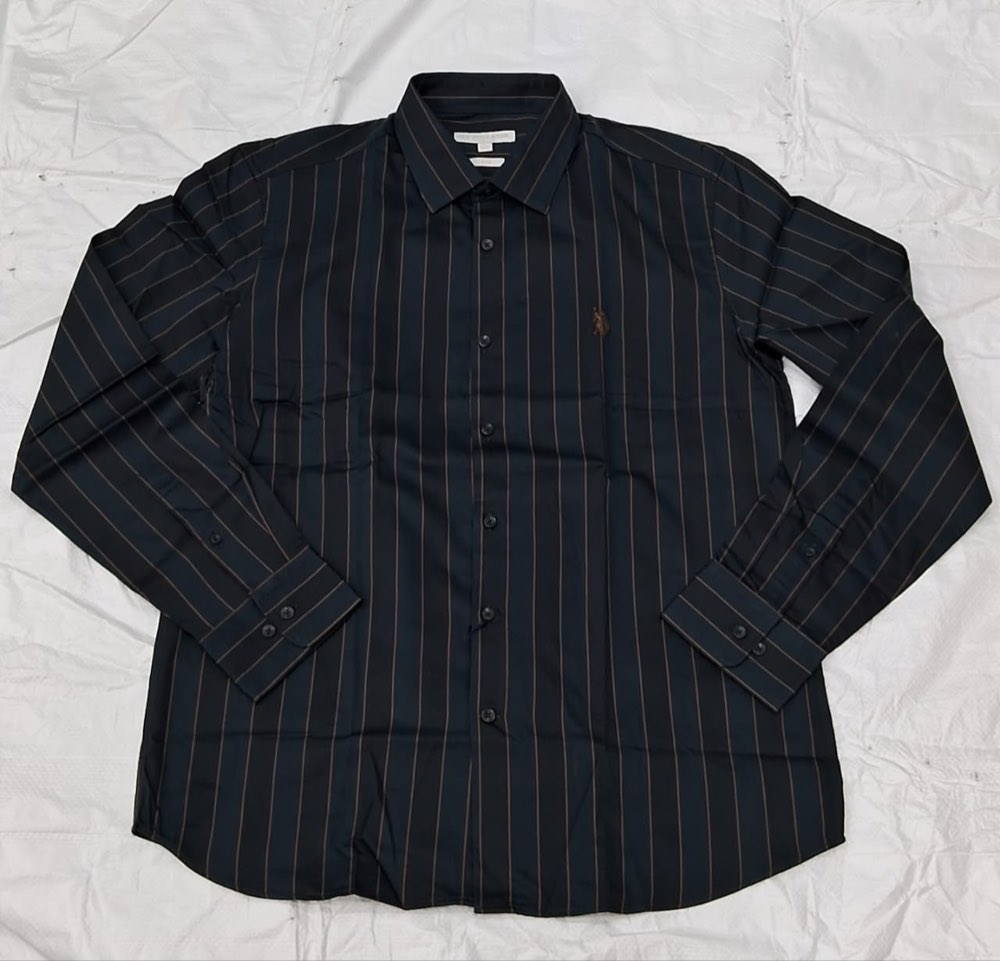
Black shirt with fine tonal vertical stripes, laid flat
Black with fine tonal stripes — a dark-ground pinstripe

Pinstripe

Very fine vertical lines, often a single thread wide, set at regular intervals on a plain ground.

Effect on appearance. Adds a sense of height and precision while reading almost solid at a distance. One of the most formal patterns available.

P-03Pattern

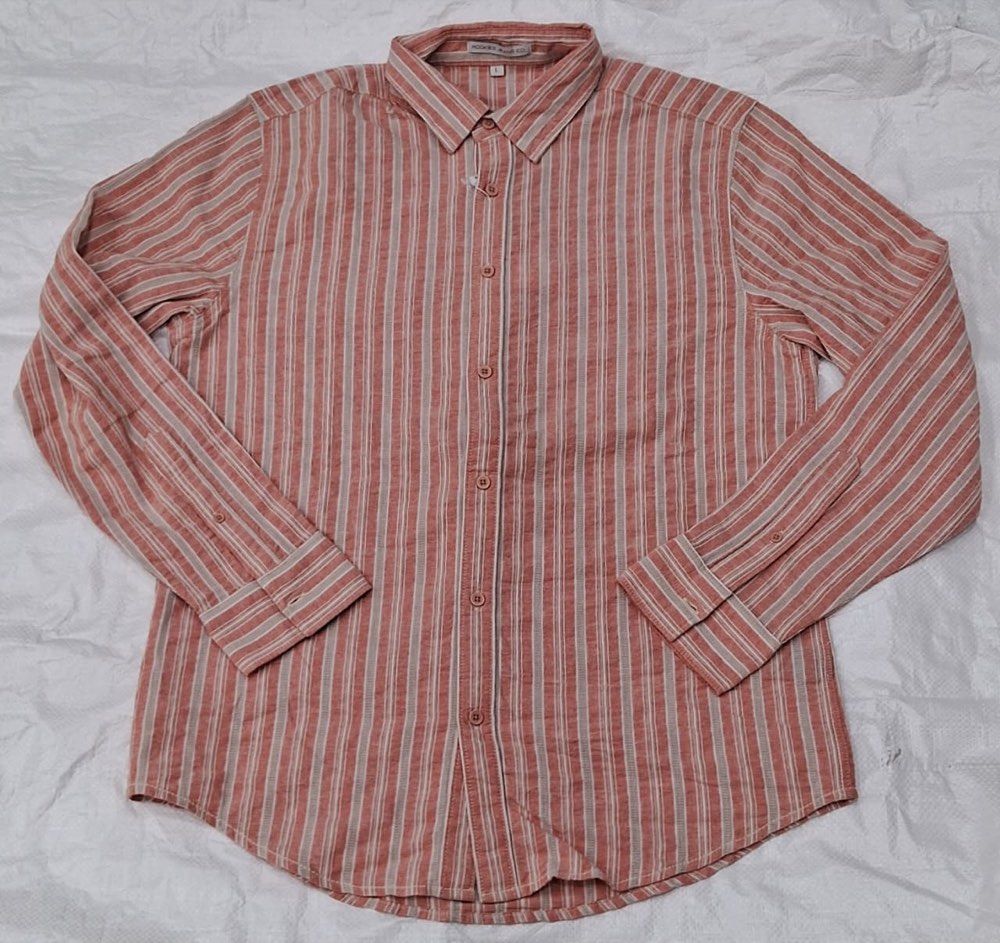
Coral and white vertical striped shirt, laid flat
Coral and white stripe — a bolder stripe; a true Bengal uses equal-width bands

Bengal stripe

Bold vertical stripes in which the coloured stripe and the white stripe are equal in width, typically a few millimetres each.

Effect on appearance. Confident and lively. More relaxed than a pinstripe, but still structured enough for the office in blue, pink or grey.

P-04Pattern

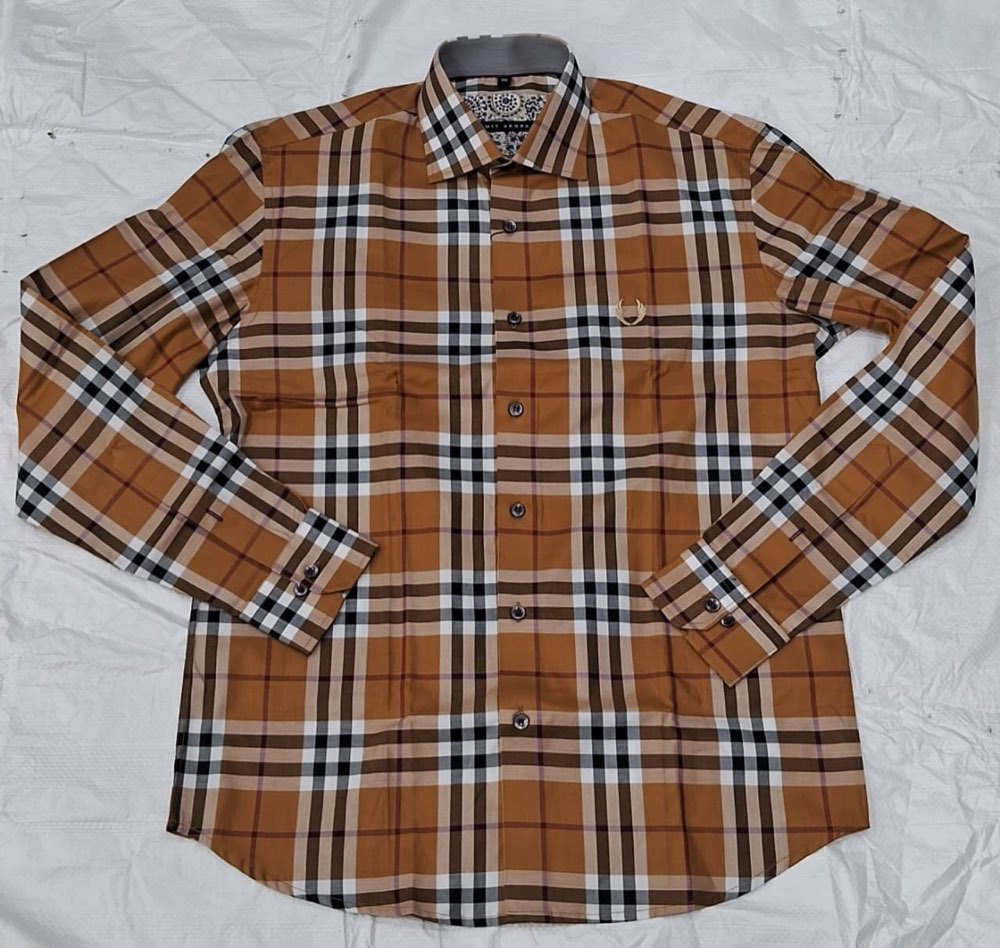
Tan, black and white tartan check shirt, laid flat
Tan, black and white tartan — a large check, for scale contrast with the finer office checks in the swatches

Checks: gingham, windowpane, tattersall

Gingham uses two colours in equal crossing bands. Windowpane uses thin lines forming large open squares. Tattersall layers thin lines in two alternating colours on a light ground. Larger multi-colour tartans, like the one pictured, sit at the casual end.

Effect on appearance. Checks feel approachable and relaxed. Small gingham and fine windowpane work in offices; tattersall has a country character; bold tartans are weekend wear.

P-05Pattern

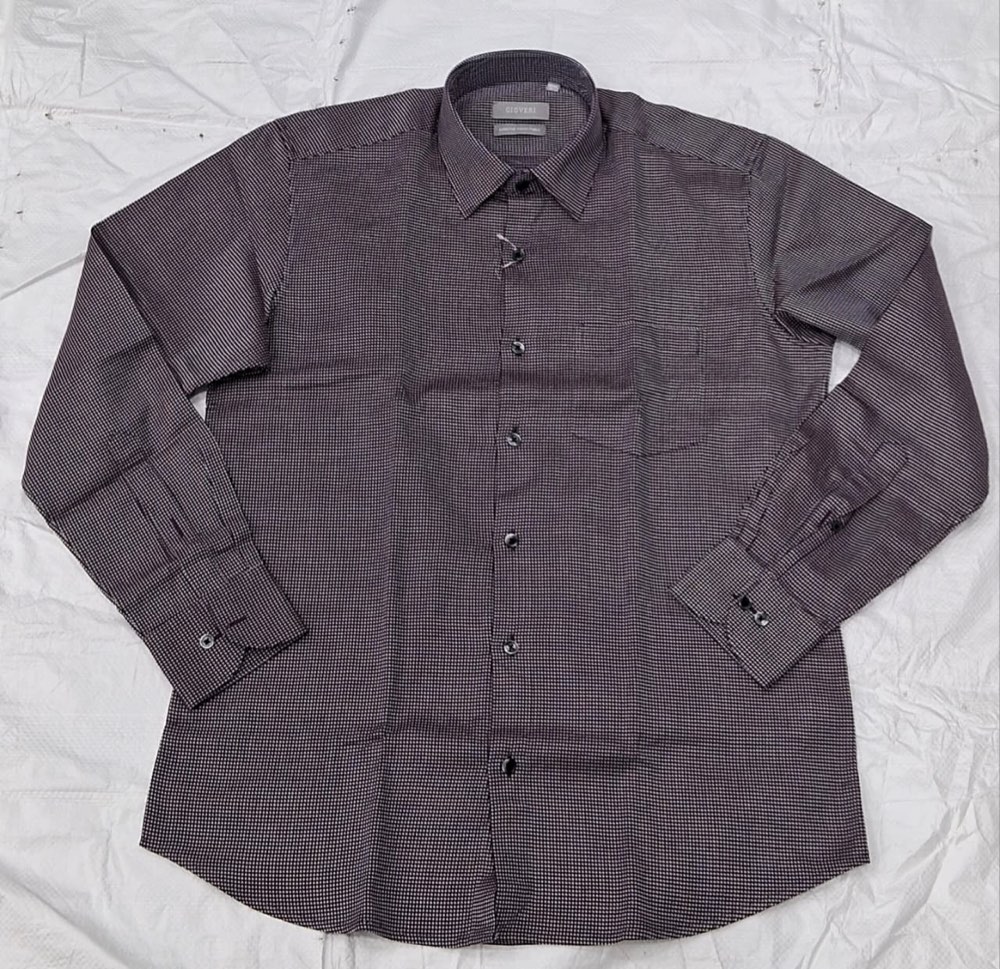
Burgundy shirt with a tiny allover micro-pattern, laid flat
Burgundy micro-pattern — reads almost solid from a distance

Micro-patterns

Tiny repeating motifs — dots, diamonds, neat geometrics or miniature florals — printed or woven at a very small scale.

Effect on appearance. Looks like a solid across the table and rewards a closer look. A quiet way to add personality to an office wardrobe.

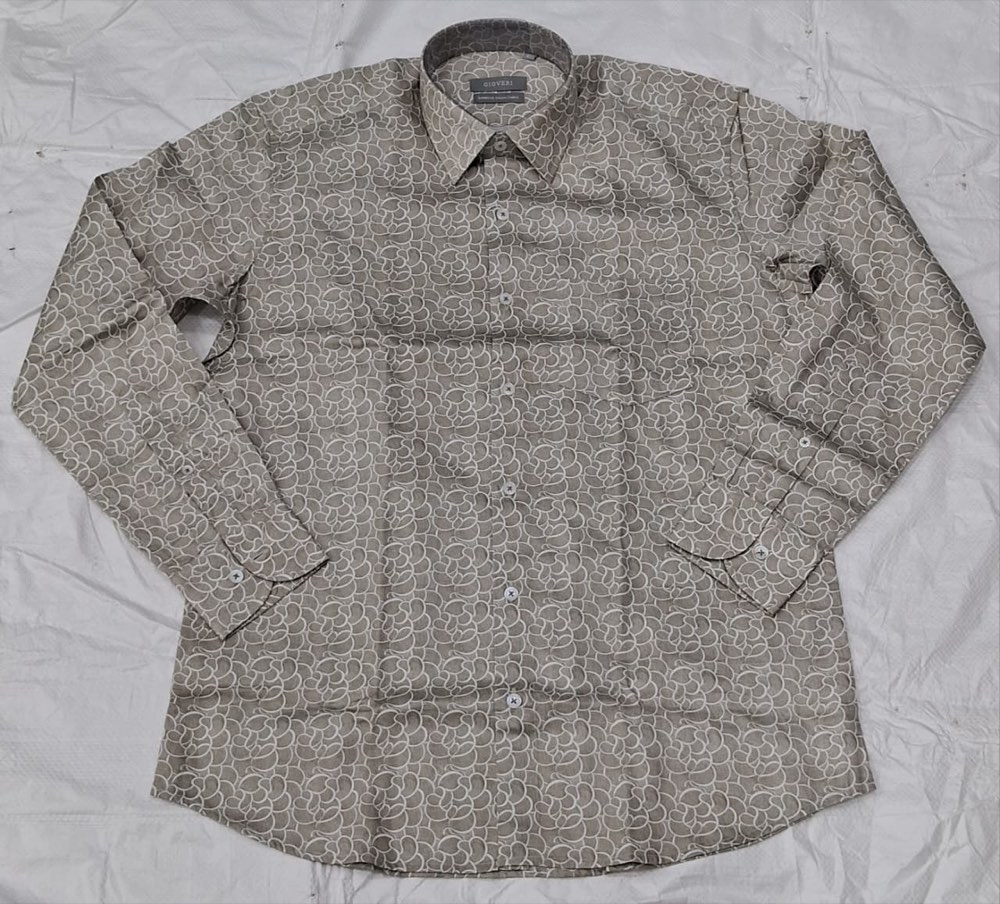
P-06Pattern

Stone grey shirt with a fine white outline print across the body, laid flat
Stone grey with a fine white outline print — surface interest that reads as texture

Subtle textures

Interest from structure rather than colour: dobby weaves, herringbone, end-on-end, royal Oxford and fine tonal prints.

Effect on appearance. Adds depth and a premium feel without a visible pattern, and helps a plain colour look richer under office lighting.

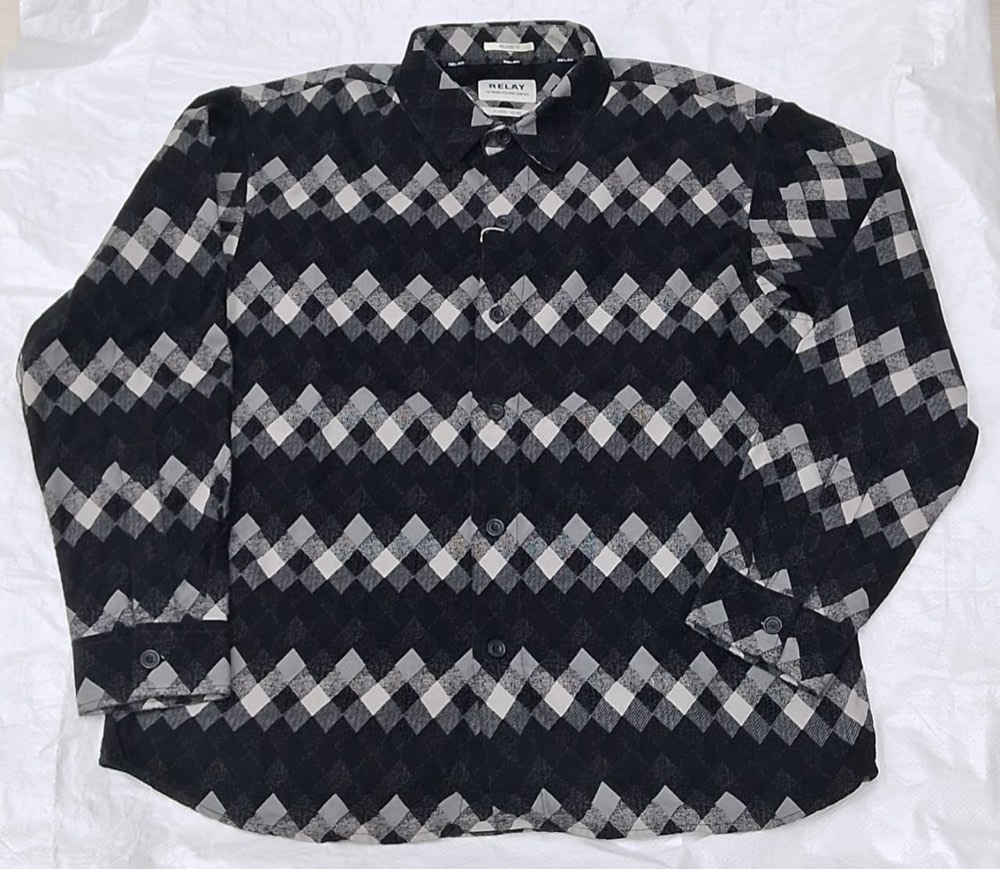
P-07Pattern

Black and white zigzag geometric pattern shirt, laid flat
Black and white zigzag — a bold geometric

Geometric

Larger repeating shapes — zigzags, diamonds, hexagons and abstract grids — printed or woven across the body.

Effect on appearance. High energy and highly visible. Best kept for smart-casual days, creative workplaces and evenings, worn with plain everything else.

Class 4 of 4 · D-01 to D-07

Details

The smaller construction details shape a shirt's character as much as its collar. Plackets, pockets, yokes, sleeves and hems decide whether a shirt looks structured or relaxed, formal or utilitarian, tucked or untucked.

Plackets compared Front view. The orange lines mark the stitched edges of a front placket; dashed buttons sit hidden behind a concealed placket.
  1. Front placketRaised strip, stitched both sides
  2. French frontNo strip, folded edge
  3. Concealed placketFly front hides buttons

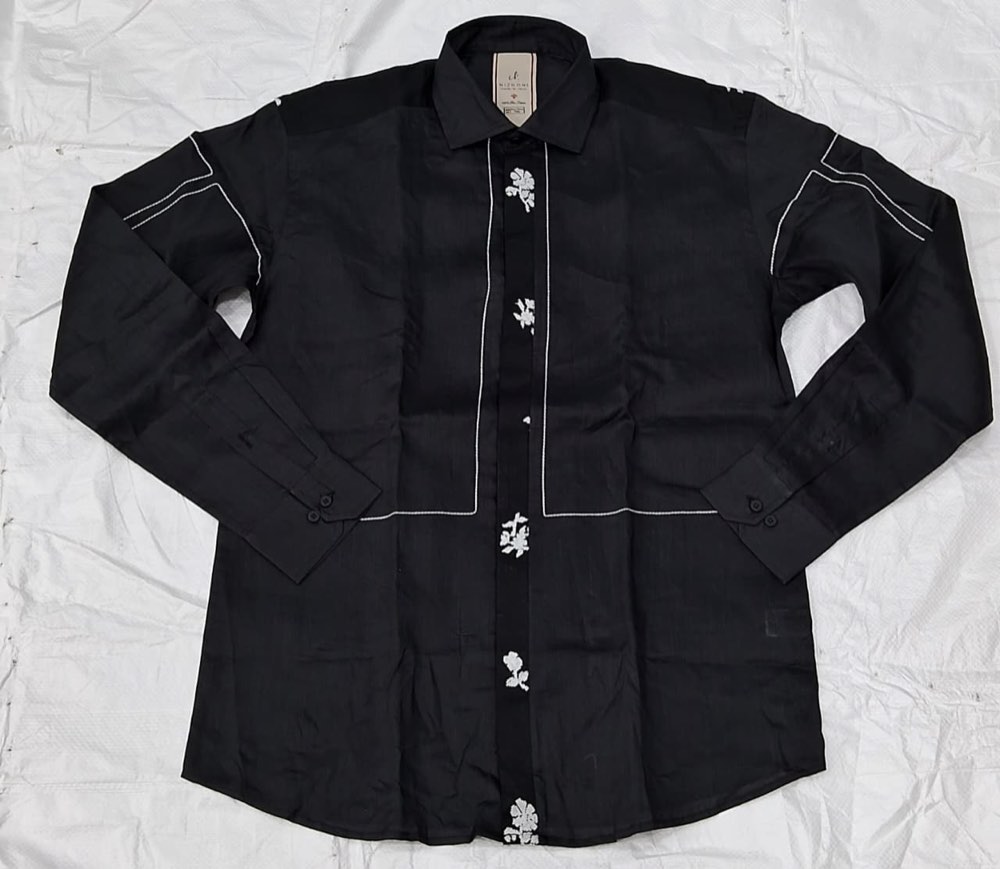
D-01Detail

Black shirt with white piping and small embroidered motifs running along the front placket, laid flat
Black shirt with white piping and embroidered motifs along the front — a decorative placket treatment

Placket styles

The placket is the strip where the shirt buttons. A front placket is a separate raised strip stitched on both edges; a French front simply folds the edge under for a smooth surface; a concealed placket adds a fly that hides the buttons.

Effect on appearance. A front placket adds a strong central line and structure. A French front looks cleaner and dressier. A concealed placket is the most minimal of all — common on evening and contemporary shirts.

D-02Detail

Diagram — spacing between buttons, with the orange mark on the neck-opening gap

Button placement

Most business shirts carry seven or eight front buttons plus collar-band and cuff buttons. Spacing — particularly the gap between the collar and the second and third buttons — sets how the shirt opens at the neck.

Effect on appearance. Closer spacing keeps the front flat and prevents gaping when seated. A higher second button gives a neater open collar; a lower one creates a deeper, more casual V.

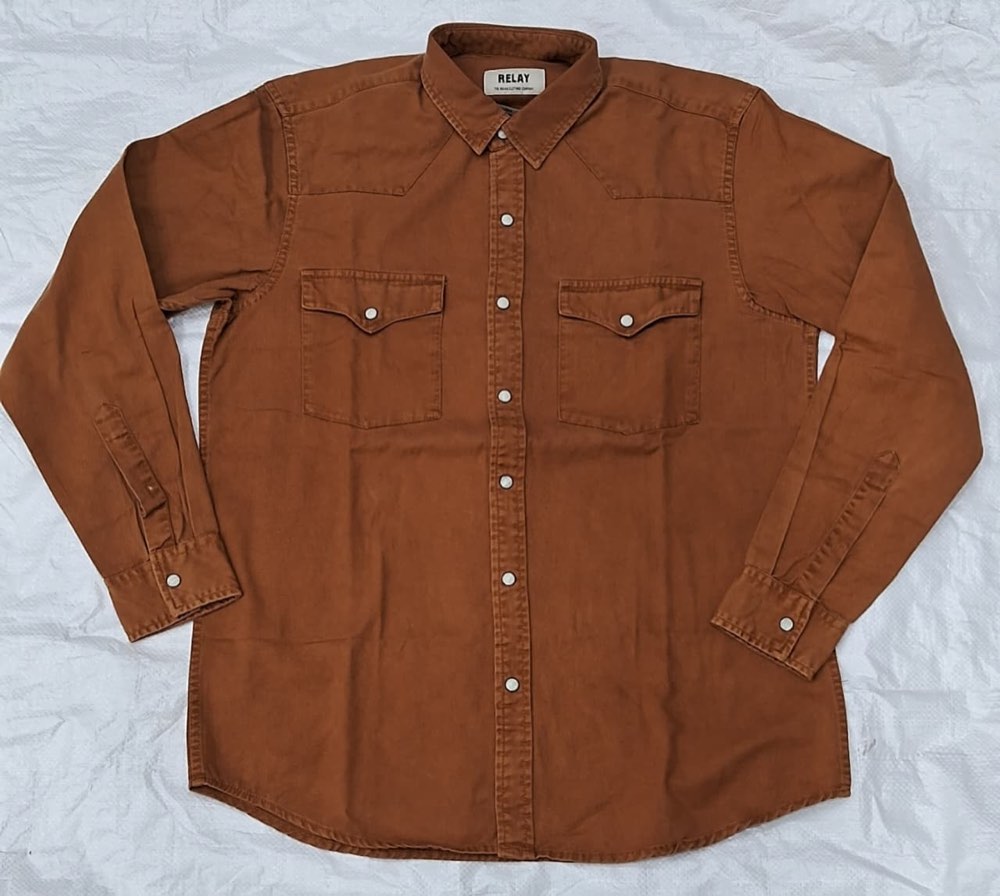
D-03Detail

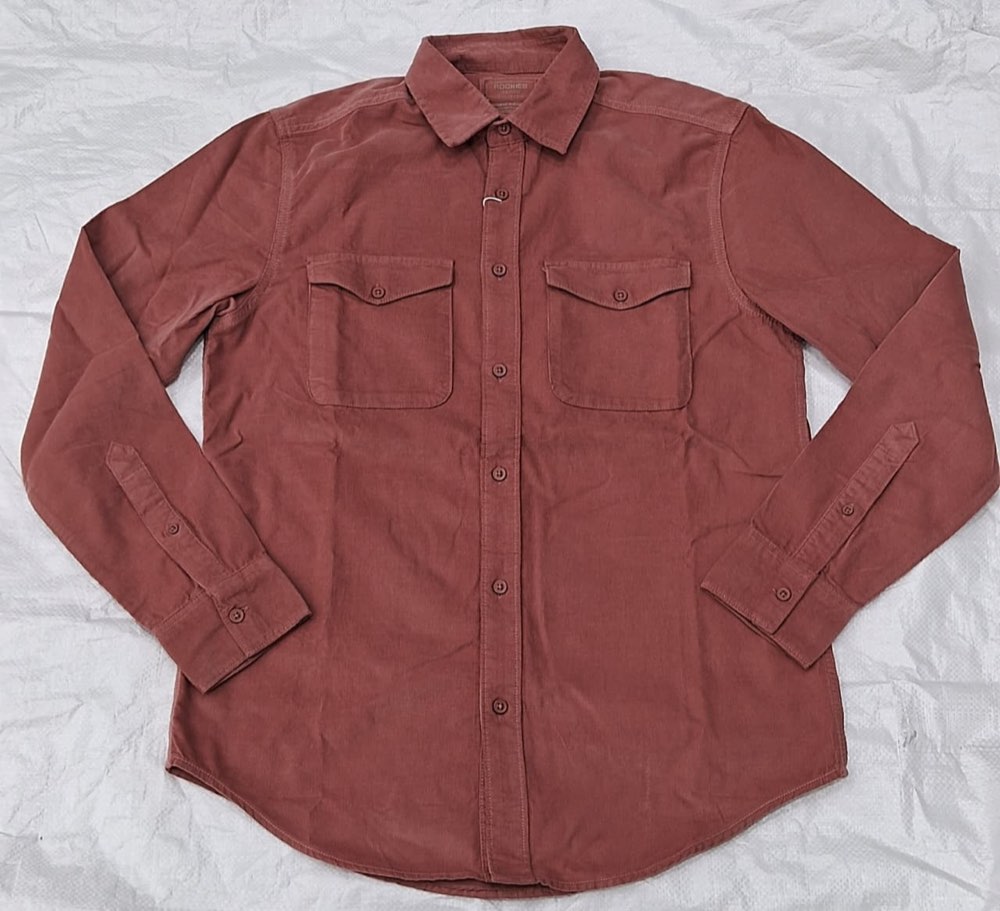
Rust shirt with twin buttoned flap chest pockets, laid flat
Rust shirt with twin buttoned flap pockets — a utility-inspired pocket design

Pocket designs

Options run from no pocket at all, through a single patch pocket with square, angled or rounded corners, to flap pockets and twin chest pockets.

Effect on appearance. No pocket is the cleanest and most formal. A single patch pocket is classic office practice. Flaps and twin pockets borrow from military and workwear shirts and read casual.

D-04Detail

Red utility shirt with twin buttoned flap pockets, laid flat
Red utility shirt with twin flap pockets — the yoke itself runs across the back of the shoulders (see diagram)

Yoke construction

The yoke is the panel across the upper back that joins the shoulders to the body. A one-piece yoke is cut as a single piece; a split yoke is cut in two halves joined at centre back, each angled to follow the shoulder slope.

Effect on appearance. A split yoke can follow the shoulders more closely and, on a striped shirt, forms a neat chevron at the centre seam. A one-piece yoke is clean and common on everyday shirts.

D-05Detail

Diagram — sleeve placket with gauntlet button (orange) and pleats into the cuff

Sleeve details

The sleeve placket opening above the cuff often carries a small gauntlet button that keeps it closed. Where the sleeve meets the cuff, fabric is gathered with one or two pleats, or tapered without pleats on slimmer shirts.

Effect on appearance. A gauntlet button stops the placket gaping and showing the forearm. Pleats give room to move; a tapered, pleatless sleeve looks sleeker.

D-06Detail

Diagrams — curved shirttail (left) and straight hem with side vents (right); orange marks the tuck line and vents

Hem design

A curved hem rises at the sides and drops front and back so it stays tucked. A straight hem is cut level, often with short side vents, and is designed to be worn out.

Effect on appearance. Curved hems belong inside trousers; worn out, they look unfinished. Straight hems give a neat, boxy edge for untucked smart-casual wear.

D-07Detail

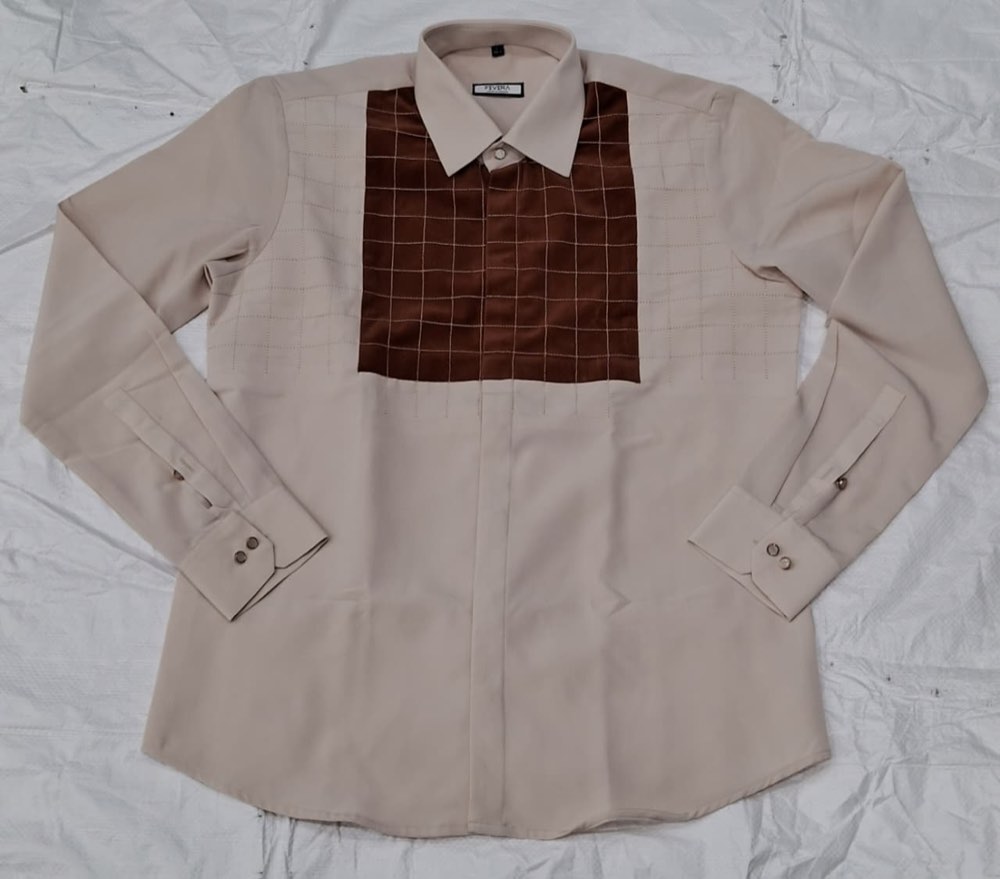
Ivory shirt with a contrasting brown check bib panel across the chest, laid flat
Ivory shirt with a contrasting check bib panel on the chest

Panels & bib fronts

A bib is a separate panel set into the shirt front. Traditional dress shirts use pleated or piqué bibs for black tie; contemporary shirts use contrast fabrics as a design feature.

Effect on appearance. A panel turns the shirt front into the focal point. Keep the rest of the outfit plain and reserve contrast panels for evenings and creative settings.

Yokes compared Back view. Orange marks the yoke seams: a single horizontal seam for a one-piece yoke, plus a centre-back seam for a split yoke.
  1. One-piece yokeSingle panel across the shoulders
  2. Split yokeTwo halves joined at centre back

+ Combinations

How the codes combine

Elements work as a set. Read these three routes as starting formulas; swap one code at a time to move a shirt up or down the formality scale.

  1. Formal route

    C-02 + K-03 + P-02 + D-01

    A spread collar, double cuffs and a fine pinstripe or plain white, with a French front or neat placket. Built for a dark suit, a silk tie and cufflinks — board meetings and formal dinners.

  2. Office route

    C-03 + K-02 + P-06 + D-04

    A semi-spread collar, two-button cuffs and a subtle texture, cut with a split yoke. Works with or without a tie, every day of the week — the core of office shirts in Mumbai's working wardrobe.

  3. Relaxed route

    C-05 + K-01 + P-04 + D-03

    A button-down collar, barrel cuffs, a small check and a chest pocket. Ideal for business casual Fridays, travel days and client visits that call for approachable, not formal.

To compare these details on real shirts, Options Mall in Vile Parle West — close to Andheri — presents men's business shirts in a range of collars, cuffs and patterns. Find the store

Next stop · 05Fits & Comfort